Fading marks and treating scars
The spot is gone but something is still there. Good news first: most of what is left is a mark, not a scar, and marks fade.
Run your finger over it
This is the simplest test there is. If the area is completely flat and only the colour is different, you are looking at a mark. If you can feel a dip, a pit or a bump, it is a scar. The two need very different approaches, and mixing them up is how people spend money on creams that cannot work.
Flat marks: brown, pink or red
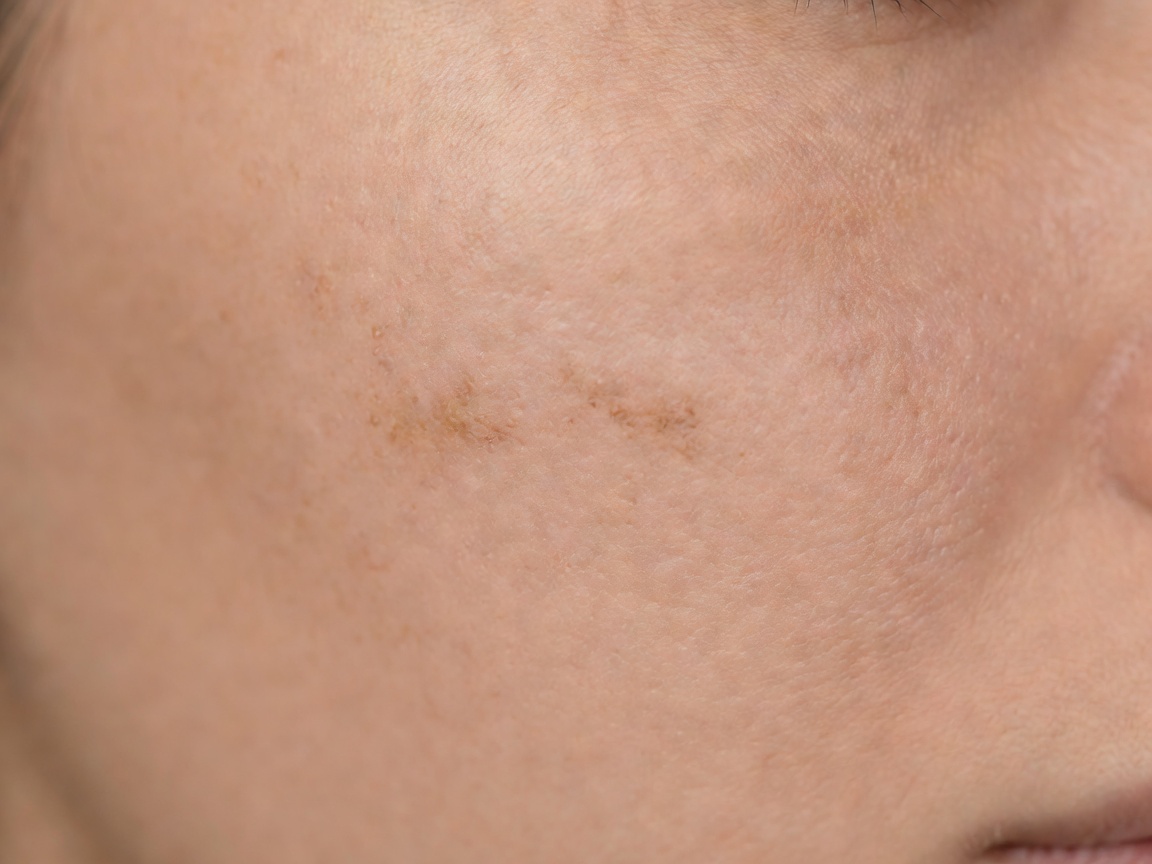
Post-inflammatory hyperpigmentation (PIH) is a brown, grey or dark patch. Inflammation tells pigment cells to make extra melanin, which gets left behind. It is more common and longer lasting in medium and deeper skin tones — Fitzpatrick types IV to VI.
Post-inflammatory erythema (PIE) is a pink, red or purple flat patch, caused by small dilated blood vessels near the surface. It is more visible on lighter skin and does not respond to pigment-fading products, because it is not pigment.
Both usually improve on their own over 3 to 12 months. PIH can take longer, sometimes up to two years, especially if exposed to sun.
What actually speeds marks up
- Stop new spotsEvery new breakout makes a new mark. Treating active acne is the most effective mark treatment there is.
- Sunscreen, dailyUV darkens PIH and keeps PIE red. Use broad-spectrum SPF 30 or higher; tinted formulas with iron oxides also help against visible light.
- A fading ingredient for brown marksAzelaic acid, retinoids, niacinamide and vitamin C have evidence for PIH. Prescription hydroquinone may be used short-term under supervision.
- Patience for red marksPIE fades slowly. If it lingers, vascular lasers such as pulsed dye laser can help.
- Hands offPicking re-inflames the area and restarts the clock.
The best scar treatment is early acne treatment. Every spot you calm quickly is one less mark to fade.
True scars: four shapes
Scars happen when deep inflammation damages collagen. Dermatologists describe a few types:
- Ice pick scars — narrow, deep holes, like a puncture.
- Boxcar scars — wider dents with sharp edges, often on the cheeks and temples.
- Rolling scars — broad, wave-like dips caused by bands pulling the skin down from below.
- Hypertrophic and keloid scars — raised scars, more common on the chest, back and jawline, and in some people with deeper skin tones.
Most people have a mix. That is why scar treatment is usually a plan, not a single session.
What professionals use
Microneedling creates tiny controlled injuries that prompt collagen remodelling; useful for rolling and shallow boxcar scars. Subcision uses a needle to release the bands under rolling scars. TCA CROSS places strong acid precisely into ice pick scars. Fractional lasers, ablative or non-ablative, resurface the skin. Fillers lift depressed scars temporarily. Raised scars are often treated with steroid injections or silicone gel sheets.
Skin of colour carries a higher risk of PIH after aggressive procedures, so choose a practitioner experienced with your skin type. In the UK, look for a consultant dermatologist on the GMC specialist register; in the US, a board-certified dermatologist.
Results are gradual and usually partial — expect improvement, not erasure. Anyone promising one-session perfection is selling, not treating. Most dermatologists also prefer to wait until active acne is controlled before starting scar work.
What does not work
Lemon juice, baking soda and harsh scrubs irritate skin and can darken marks. "Scar creams" sold for acne pits cannot rebuild lost collagen. Save your money for sunscreen.