Oil, bacteria and blocked pores
Acne has four moving parts. None of them is "you didn't wash properly". Here is how they fit together.
Acne vulgaris is one of the most common skin conditions in the world. Most people get some acne between the ages of 12 and 25, and plenty of adults — particularly women in their twenties, thirties and beyond — keep getting it or start getting it later. If you have spots, you are in very large company.
Dermatologists usually describe acne as the result of four overlapping processes. Understanding each one is the whole point of this site, because every effective treatment targets at least one of them.
1. Too much oil
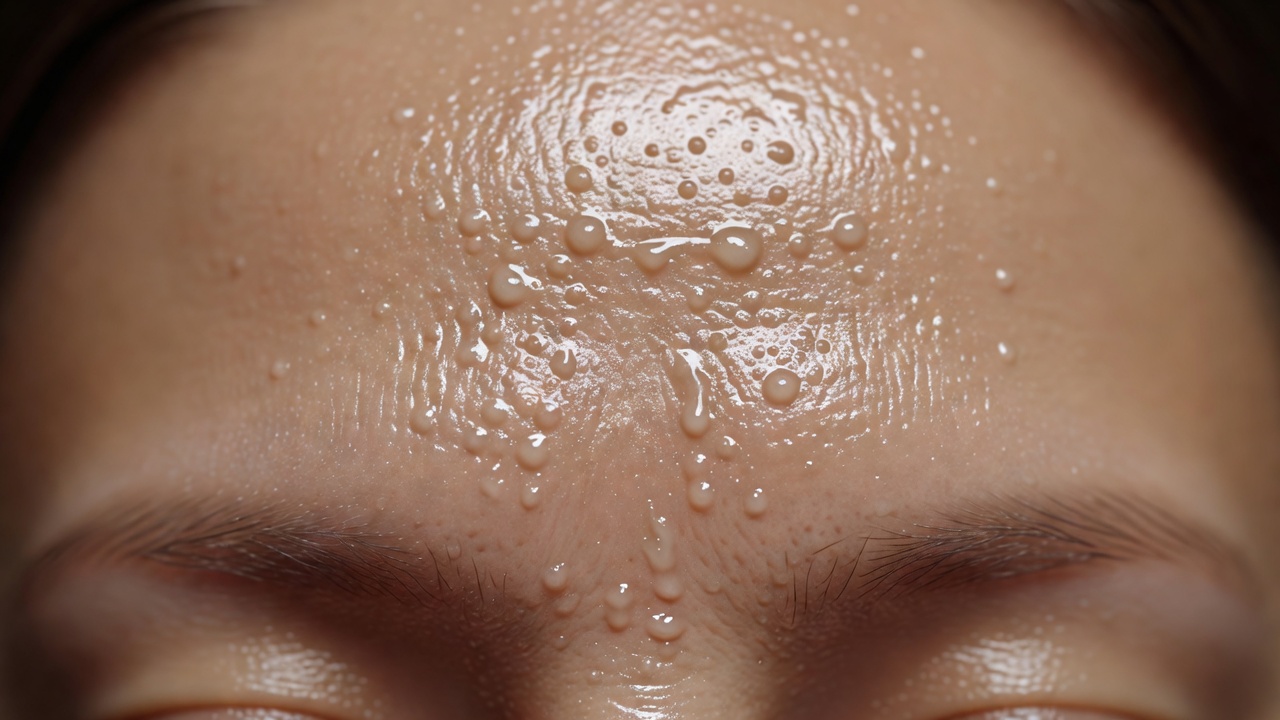
Each follicle has a sebaceous gland that produces sebum. Androgens — hormones that rise sharply at puberty in every sex — make these glands larger and more productive. That is why acne so often arrives with puberty, and why it tends to cluster on the face, chest and upper back, where oil glands are densest.
Oily skin is not dirty skin. Stripping it with harsh cleansers can actually leave it irritated and flaky, which makes the next problem worse.
2. Sticky dead skin cells
The lining of a follicle constantly sheds cells. In acne-prone skin those cells cling together instead of flowing out, a process called follicular hyperkeratinisation. Mixed with sebum, they form a plug — the microcomedone. This is the seed of every spot, and it is invisible for weeks before anything shows on the surface.
When the plug stays under closed skin, you get a whitehead. When the opening widens and the plug meets air, the top darkens and you get a blackhead. That dark dot is oxidised oil and melanin. No amount of scrubbing will "clean" it out, because it is not grime.
3. Bacteria that like a sealed pore
Cutibacterium acnes (formerly Propionibacterium acnes) lives on almost everyone's skin. It feeds on sebum and thrives without oxygen, so a plugged follicle is ideal. It is not an infection you caught from someone, and it is not a sign of poor hygiene. It is simply part of the skin's normal population that gets out of balance in a blocked pore.
4. Inflammation
Your immune system reacts to the swollen, bacteria-rich follicle. That reaction is what makes a spot red, sore and raised. If the follicle wall ruptures, the contents spill into surrounding skin and inflammation spreads deeper, forming nodules. Deep inflammation is what leads to scarring, which is why painful, deep acne deserves prompt medical care.
Every acne treatment worth using targets one of four things: oil, plugging, bacteria or inflammation.
The things that turn the dial up
- Genes. If a parent had significant acne, you are more likely to. That is not a moral failing; it is inheritance.
- Hormonal shifts. Many people notice flares before a period. Conditions such as polycystic ovary syndrome (PCOS) can drive persistent jawline and chin acne.
- Friction and pressure. Helmet straps, phone screens, sports kit and face masks can trigger "acne mechanica".
- Heavy or occlusive products. Thick hair oils and pomades can cause spots along the hairline and forehead.
- Some medicines. Corticosteroids, certain anti-epileptics and lithium are known culprits. Never stop a prescribed drug without speaking to your prescriber.
- Diet, maybe. Evidence links high-glycaemic diets and, more weakly, skimmed milk to acne in some people. It is a nudge, not the cause.
- Stress. Stress does not create acne from nothing, but it can worsen flares and make picking more likely.
Myths to put down
Acne is not caused by dirt, by masturbation, by not drinking enough water, or by touching your face once. Sunbathing does not "dry it out" — it can temporarily hide redness while darkening marks and irritating skin. Toothpaste on a spot mostly causes a chemical burn.
Now that you know which four processes are involved, the treatment list stops looking random. Benzoyl peroxide hits bacteria. Retinoids stop plugging. Salicylic acid loosens plugs already formed. Hormonal and oral treatments turn down oil and inflammation from the inside.